
Blog
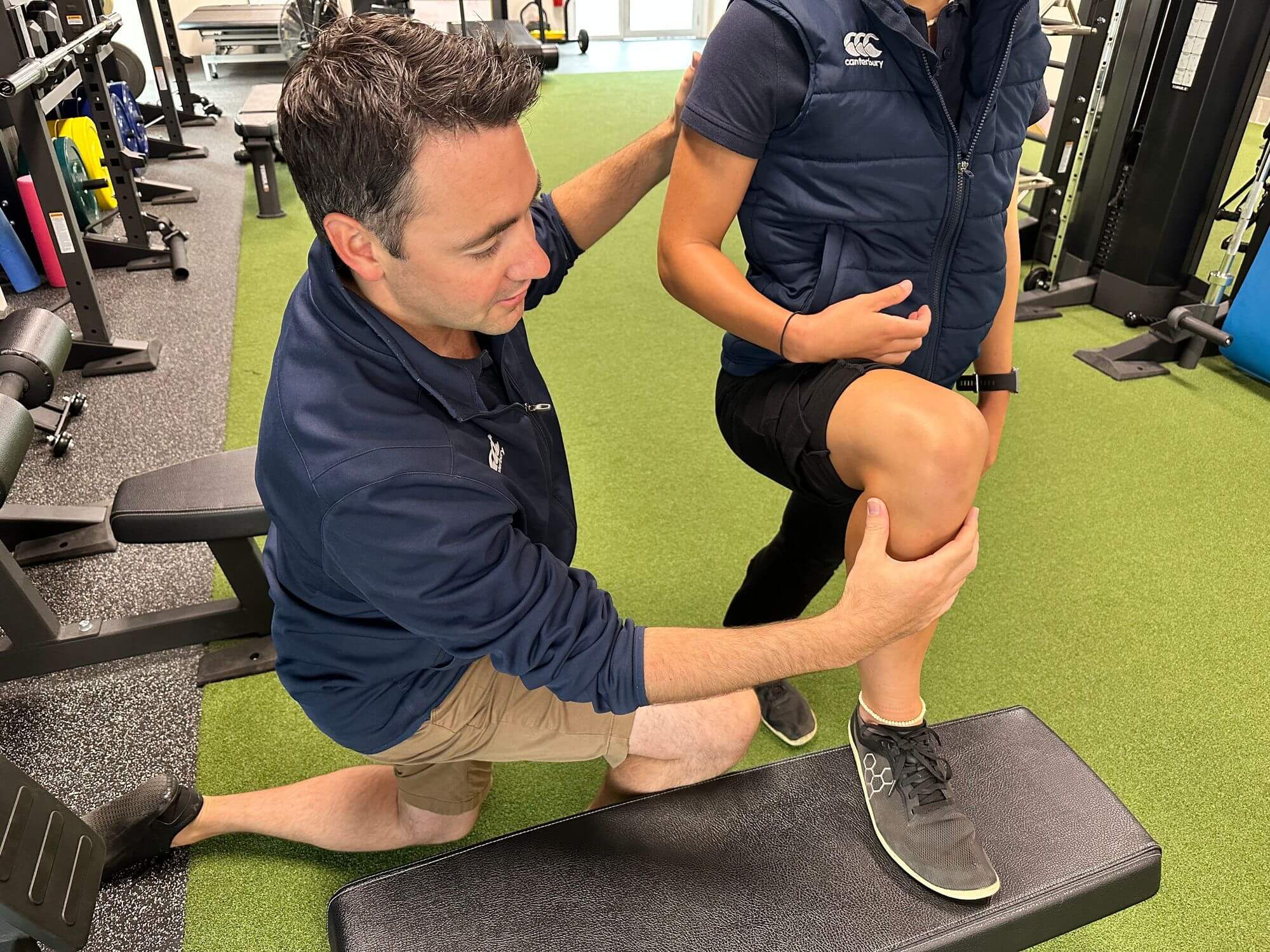
What is post-injury rehab, and where do you start?
Post-injury rehabilitation (Sport injury rehab) helps you regain strength, movement, and function after an injury or surgery.
Good rehab does more than just relieve pain. It helps find out why you got hurt so you can return to sport, work, and daily life safely without re-injuring yourself. Many people roll an ankle or strain a muscle, wait for the pain to stop, and go right back to activity, only to hurt themselves again a few months later. Pain may go away, but the tissue still needs time and targeted exercises to fully recover.
At Movement Therapy, our physiotherapists, chiropractors, and exercise physiologists work together to guide your recovery in Wollongong and Picton. In this post, we explain the four main phases of rehab, what to look for in a clinic, and how long recovery usually takes.
The 4 phases of post-injury rehab
Think of a newly poured concrete path. It may look hard after a day, but it takes weeks to reach full strength. If you push a heavy wheelbarrow over it too soon, it cracks. Healing tissue works the same way. That is why proper rehab follows key stages of healing rather than just how you feel.
Phase 1: Protect (First few days up to 2 weeks)
The focus here is reducing pain and swelling while protecting the injured area. You should not rest completely. Gentle, pain-free movements help keep surrounding muscles active and prevent joints from stiffening up.
Phase 2: Repair (Around 2 to 6 weeks)
Your body is building new tissue to repair the injury, but this tissue is still fragile. Pain often decreases during this stage, which leads many people to stop rehab early. However, no pain does not mean full healing. Stopping early is a primary cause of repeat injuries. During Phase 2, we work on restoring full movement, rebuilding strength safely, and fixing any movement habits that may have contributed to the injury.
Phase 3: Rebuild (Around 6 weeks to 6 months)
The repaired tissue is stronger now, but not back to full power. This phase focuses on progressive strength training, balance work, and movement routines that match the demands of your sport or daily activity.
Phase 4: Return to Sport and Work
This phase depends on what your body can safely do, not just the calendar. Before fully returning to work or sports, you need equal strength on both sides, full movement, and confidence in tasks like jumping, running, or lifting. Return to activity should be gradual.
What to look for in a rehab clinic
Not all clinics approach recovery the same way. Consider these factors when choosing a clinic:
- Licensed practitioners. Ensure physiotherapists and chiropractors are registered with AHPRA, and exercise physiologists are accredited with ESSA.
- Full-body assessment. The clinic should evaluate how your whole body moves, not just where it hurts.
- Manual therapy with a focus on exercise. Hands-on treatment helps ease pain, but structured exercise builds long-term strength.
- Clear plan and testing. You should understand your diagnosis, treatment steps, timeline, and measurable goals needed before returning to sport or work.
Common injuries we help people recover from
We treat people of all ages and fitness levels at our Wollongong and Picton clinics, including athletes, workers, and active parents or grandparents.
- Ankle sprains. Rebuilding balance and stability to prevent re-injury. Learn more in Dodgy Ankles... What's the Solution?
- Muscle strains. Safe progression for hamstring, calf, and groin injuries.
- Knee injuries. Care for meniscus tears and ACL recovery, including surgical rehab or non-surgical options like the Cross Bracing Protocol.
- Shoulder pain. Help with rotator cuff issues and inflamed shoulder joints.
- Post-surgery rehab. Recovery plans following ACL, shoulder, or joint replacement surgeries.
- Fracture recovery. Restoring strength after a doctor clears you to move.
- Overuse injuries. Solutions for shin splints, plantar fasciitis, and tennis elbow.
Post-injury rehab in Wollongong and Picton
Movement Therapy serves patients across the Illawarra and Wollondilly regions from two convenient locations.
- Wollongong clinic
36 Young Street, Wollongong NSW 2500
(02) 4203 2455
Wollongong Movement Clinic
- Picton clinic
28 Menangle Street, Picton NSW 2571
(02) 4677 5990
Picton Movement Clinic
Ready to start your recovery? Don't let an injury hold you back. Book an appointment online today or schedule a free 10-minute discovery call to discuss your injury with our team before your visit!
Frequently asked questions
Do I need a doctor's referral?
No, you can book directly. A referral is only required if you plan to claim through Medicare or special funding schemes.
Is rehab covered by private health insurance?
Most health funds offer rebates for physiotherapy, chiropractic, and exercise physiology under extras cover. Check with your provider for details.
Can I keep exercising while injured?
Yes, in most cases. Complete rest is rarely needed. Your therapist will show you how to adapt your workouts safely.
Is it too late to treat an old injury?
No. Even if an injury happened months or years ago, targeted exercises can still improve strength, movement, and comfort.
Should I see a physio, chiro, or exercise physiologist?
All three professionals work together at Movement Therapy. We will match you with the right clinician for your needs when you book.
Have a Question?
We're here to help!
Our Clinic Locations
Movement Therapy has two prime clinic locations: